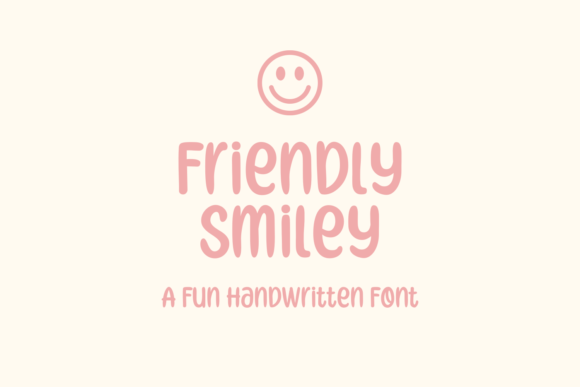
Friendly Smiley: A Handwritten Font for Web Design
In the crowded digital landscape, where user attention spans are measured in milliseconds, the choice of typography can make or break a visitor’s first impression. As web designers and UI creators, we often lean on safe, neutral sans serif fonts to ensure maximum readability. However, safety does not always equate to memorability. This is where Friendly Smiley enters the conversation. It is not just another addition to your library of fonts; it is a strategic design asset that bridges the gap between professional structure and human warmth.
Friendly Smiley is a fun, natural, and informal handwritten font that brings an immediate sense of approachability to any digital interface. For designers working on landing pages, online stores, or personal brand websites, this typeface offers a unique opportunity to soften rigid layouts without sacrificing clarity. Its organic strokes mimic the flow of actual handwriting, creating a visual rhythm that feels authentic rather than manufactured. In an era where users crave genuine connection, integrating a script handwritten font like Friendly Smiley can significantly enhance brand tone and user engagement.
Enhancing Visual Hierarchy and Brand Tone
One of the primary challenges in web design is establishing a clear visual hierarchy. Users scan pages rather than reading them word-for-word. To guide their eyes effectively, we need contrast. Friendly Smiley serves as an excellent display font for hero sections, section headings, and call-to-action areas. When paired with a clean, geometric sans serif font for body copy, it creates a dynamic interplay that draws attention to key messages.
Consider a coaching website or a creative portfolio. The goal is to convey expertise while remaining accessible. Using Friendly Smiley for the main headline on the homepage instantly communicates a personality that is open, friendly, and creative. It breaks the monotony of standard web typography, making the content feel less like a corporate brochure and more like a personal invitation. This shift in tone can directly impact conversion rates, as users are more likely to trust a brand that feels human and relatable.
For online store owners, this font can be particularly effective in banner graphics and promotional sections. Whether you are selling handmade crafts, boutique clothing, or digital courses, the informal nature of Friendly Smiley aligns well with products that emphasize care, craftsmanship, and individuality. It adds a layer of emotional resonance that sterile, default system fonts simply cannot achieve.
Practical Applications in Digital Layouts
To get the most out of Friendly Smiley, it is essential to understand where it performs best and where it might struggle. As a decorative accent, it shines in short phrases, logos, and pull quotes. It is less suitable for long paragraphs of text, where readability is paramount. Here are some practical ways to integrate this typeface into your web projects:
- Hero Headers: Use Friendly Smiley for the main value proposition on landing pages. Its distinct character ensures it stands out against background images or solid colors.
- Call-to-Action Buttons: For buttons with short text like "Join Us" or "Get Started," this font can add a playful touch that encourages clicks, provided the size is large enough to remain legible.
- Social Media Graphics: Extend your brand identity beyond the website by using Friendly Smiley in Instagram stories, Pinterest pins, and Facebook ads. Consistency across platforms strengthens brand recognition.
- Testimonials and Quotes: Highlighting customer feedback with a handwritten font adds authenticity, making the testimonials feel more personal and trustworthy.
- Logo Design: For startups and small businesses, Friendly Smiley can serve as the basis for a logo mark, offering a custom look without the high cost of bespoke lettering.
When designing for mobile screens, responsiveness is key. Handwritten fonts can sometimes lose detail at smaller sizes. Therefore, ensure that when Friendly Smiley is used on mobile devices, the font size is increased slightly compared to desktop views. Avoid using it for navigation menus or footer links where space is limited and clarity is critical. Instead, reserve it for impactful, standalone elements that have enough breathing room.
Readability and Accessibility Considerations
While aesthetic appeal is important, usability must never be compromised. Friendly Smiley is designed to be natural and legible, but like all script fonts, it requires careful handling regarding contrast and spacing. When placing text over image overlays, ensure there is sufficient contrast between the font color and the background. A dark handwritten font on a light background, or vice versa, works best. Avoid low-contrast combinations, such as light gray on white, which can render the intricate strokes of the font invisible to users with visual impairments.
Additionally, pay attention to line height and letter spacing. Handwritten fonts often have irregular kerning. In CSS, you may need to adjust the letter-spacing property to prevent characters from overlapping or appearing too distant. Proper spacing ensures that the font remains readable and maintains its intended casual elegance.
Strategic Font Pairing for Modern Typography
The true power of Friendly Smiley is unlocked through effective font pairing. Because it is a expressive script handwritten font, it needs a stable partner to ground the design. A modern sans serif font is the most reliable choice for body text. Fonts like Inter, Roboto, or Open Sans provide a neutral backdrop that allows Friendly Smiley to shine without competing for attention.
For a more editorial or sophisticated look, you might pair it with a classic serif font. This combination works well for blogs, magazines, or lifestyle brands that want to evoke a sense of tradition mixed with modern creativity. The serif font adds authority and structure, while Friendly Smiley injects personality and warmth. Avoid pairing it with other decorative or highly stylized fonts, as this can create visual clutter and confuse the user’s eye.
Licensing and Technical Implementation
Before integrating Friendly Smiley into client projects or commercial products, it is crucial to review the licensing terms. Most premium fonts offer different licenses for personal use, commercial web use, and app embedding. Ensure you have the appropriate webfont license if you plan to host the font files on your server or use a service like Adobe Fonts or Google Fonts. Check for available file formats such as WOFF and WOFF2, which are optimized for web performance and faster loading times.
Also, verify multilingual support if your target audience is global. While many handwritten fonts focus on basic Latin characters, checking for extended character sets ensures that your design remains consistent across different languages. Finally, test the font across various browsers and devices to ensure consistent rendering. A font that looks perfect on Chrome might render slightly differently on Safari or Firefox, so cross-browser testing is an essential step in the quality assurance process.
Incorporating Friendly Smiley into your design toolkit is more than just a stylistic choice; it is a strategic decision to humanize your digital presence. By balancing its playful nature with structured layout principles and accessible design practices, you can create web experiences that are not only visually appealing but also emotionally engaging. Whether you are building a SaaS landing page, a boutique e-commerce site, or a personal blog, this font offers the versatility and charm needed to elevate your brand identity in the digital space.